Tuesday, April 5, 2016

LAD #37

Brown v. Board of Education

In the 1950s, one of the major problems of racial segregation was unfairness in the school systems. Even though they claimed that schools were "separate yet equal" the black schools were undoubtedly inferior to the white schools.

In Topeka, Kansas the Brown family decided they wanted to challenge this. Linda brown, a black third-grader, had to walk a mile to school every day, even though a white school was only seven blocks away. The Brown family joined with the NAACP to try to get Linda into the nearby white school.

They argued that the schools were not equal and they were harmful because they made black children feel inferior to whites and this affected them for the rest of their lives.

After several court cases, the court decided that separate but equal was unconstitutional and schools across the country needed to be desegregated. Although this was a major step, other places such as restaurants and bathrooms were still segregated. 


Friday, March 18, 2016

LAD #36

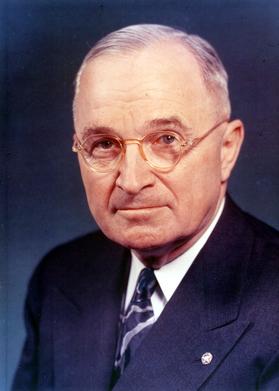
The Truman Doctrine

After World War II, the United States was worried that communism would spread throughout the world, and eventually it may reach America. The United States hoped to prevent the expansion of the communism and maybe even get rid of it all together.

The Truman Doctrine stated that the United States should have the power to help other nations that were prone to be taken over by communistic countries. Truman uses Greece as his first example. He stated that "Greece is not a rich country" and therefore they are more likely to be taken over. They do not have the funds to protect themselves from other thriving nations. On top of that, the Germans had destroyed "virtually all the railways, roads, port facilities, communications, and merchant marine" during World War II. The "very existence of the Greek State" was at risk.

Since the Greek Government would not be able to handle the situation by themselves, Truman states that America should lend a hand to their ally and change the fate of the failing country.

America would send materials and troops in order to save Democratic countries from falling to communism.

Wednesday, March 9, 2016

LAD #35

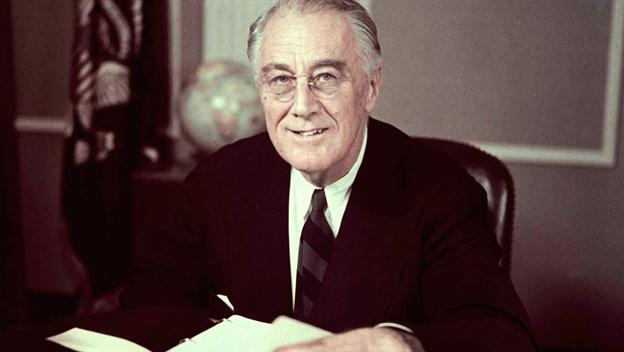
FDR's Executive Order #9066

On February 19th, 1942, ten weeks after the Japanese bombed Pearl Harbor, FDR signed the Executive Order #9066 which allowed the American government to remove any one from military areas if it seemed "necessary or desirable." This was the start of Japanese internment camps.

Over 110,000 Japanese Americans were relocated and they were stuck in these camps for two and a half years. They endured poor living conditions and awful treatment from their guards. (Sounds pretty similar to the Jewish concentration camps in Germany, eh?)

The Japanese were wrongly accused of siding with the Japanese government, even though a majority of them were born in the United States and had no strong ties to Japan at all! Some Japanese were even accused of being spies for Japan on American soil. On December 17, 1944, the Japanese were finally free to return to their homes, but they had to recreate their lives since they were torn from it for a couple of years.

In 1988, Ronald Reagan signed a bill that gave all of the Japanese that were alive during WWII a check for $20,000 and an apology.

LAD #34

FDR's Declaration of War

Soon after the attack on Pearl Harbor, Franklin D. Roosevelt declares war on Japan. His war declaration addressed the American people and was broadcasted through the radios so that the American people would be aware of what was going on. Roosevelt announces that the United States was attacked by the Japanese people (who we were at peace with until this point) and that, unfortunately, many American lives were lost in the attack. He then continues on and lists all the other countries in the Pacific that the Japanese have attacked (Hong Kong, Guam, Philippine Islands, etc.).

Roosevelt asks Congress to declare war because of the "unprovoked and dastardly attack by Japan." He confidently states that "our armed forces, with the unbounding determination of our people, will gain the inevitable triumph."


Tuesday, March 1, 2016

LAD #33

Franklin D. Roosevelt First Inaugural Address

Before becoming president, FDR was the Governor of New York. When he recited his inaugural speech, he addressed the nation by radio.

He began his speech with a positive and powerful outlook and spoke his famous words, "the only thing we have to fear is fear itself." He stated that the United States would, in fact, "revive and prosper" even when faced with adversity.

He then states that American "values have shrunken to fantastic levels" while people have become more obsessed with material items. People have become more obsessed with money and less obsessed with their morality. He also stated that "taxes have risen" (again, people are affected the most by money). He stated, "happiness lies not in the mere possession of money; it lies in the joy of achievement."

He planned to find work for the unemployed and to redistribute the population to clear out the messy urban centers.

He ended his address by stating that the United States has not failed and there is still a lot of hope for the country. He then thanks God for protecting each American citizen and asks God to guide him through the next few years during his presidency.


LAD #32

Kellogg-Briand Peace Pact

The Kellogg-Briand Peace Pact was an agreement between many of the major world powers to avoid and renounce "war as an instrument of national policy." There were many countries that agreed to this pact and a few of them were the United States, Australia, Canada, Germany, Italy, and Ireland. The nations wanted to maintain "peaceful and friendly relations" between all. They also wished to unite the many countries around the globe and improve relations. The United States, under Herbert Hoover, were responsible for providing a copy of this treaty to every nation that agreed to it. The signing of the original document took place in Paris.

Friday, February 5, 2016

LAD #31

President Wilson's 14 Points 

After World War I, President Wilson gave a speech on war aims and peace to Congress. His fourteen points outlined ways to remain peaceful with other nations and acted as a plan to try to avoid another world war.

The points included ideas such as:
-Open navigation in all seas during war and peace times 
-The removal of economic barriers and having equality in trade between all nations 
-No private international understandings of any kind 

He then shifted his focus onto the nations of Europe and stated ideas such as:
-The freedom of French territory
-The evacuation of Russian territory 
-Readjustment of the frontiers of Italy
-An independent Polish state 

He stated that these changes would help to ensure peace between all nations and would help the world to thrive.


LAD #30

Schenck vs. U.S.

During World War I, Schenck mailed out advertisement circulars to the draftees of the United States. The circulars states that the draft was a "monstrous wrong" that was motivated by the capitalist system. Essentially, the flyers advised against submitting to the draft and stated that men peacefully petition to repeal the Conscription Act.  Schenck was charged for his actions.

The big question that was posed during this case was whether or not Schenck had the right to do this because of the First Amendment of free speech.
The court's conclusion  was that Schenck was not protected by the amendment and every case had to be judged considering the specific circumstances. In this case, "utterances tolerable in peacetime can be punished" during war.

"Clear and Present Danger" addressed this idea that the Supreme Court can determine under what circumstances limits can be placed on the First amendment freedoms of speech, press or assembly.


Wednesday, January 20, 2016

LAD #28

Woodrow Wilson's First Inaugural Address:

The election of Woodrow Wilson prompted a major shift in American politics. The Democratic Party had won the election because of a split in the voters between the two Republican candidates. The success of the Democrats mean "more than just a victory for the party."

Wilson focused on things other than the political and economic problems in America. He spoke of problems within the country and how America had sympathy and compassion for people who were less fortunate. It would become the nation's goal to "alleviate suffering, and set the weak in the way of strength and hope." During Wilson's first term he focused on domestic problems within the United States.


LAD #29

The Keating-Owen Child Labor Act of 1916

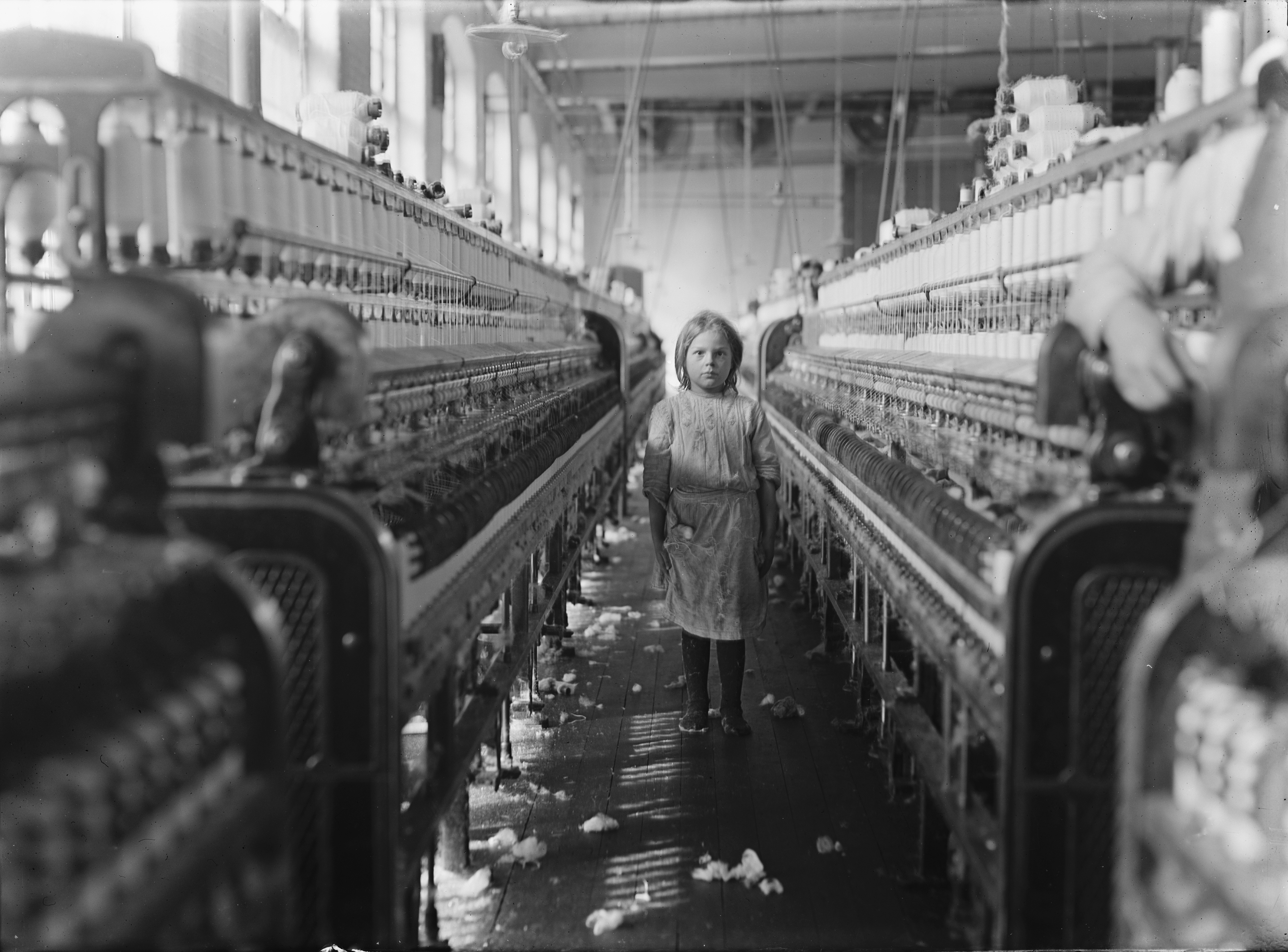
In the early 1900s, America began to realize that there was a major problem with child labor within the country. Approximately 2 million children were working in various jobs nation wide. During the social reform age, photographers were sent to working places to take pictures of the awful conditions that children were being faced with. The effects of child labor were detrimental and child labor needed to be stopped. Even famous historical figures such as Karl Marx and Charles Dickens were stuck in factories as children.

The act banned factories from hiring anyone under 14 and mines from hiring anyone under 16. Children under 16 were also not allowed to work at night or for more than 8 hours a day.

The bill was passed by Congress and signed by Woodrow Wilson but declared unconstitutional.


Tuesday, January 19, 2016

LAD #27


Clayton Anti-Trust Act:

The Clayton Anti-Trust Act was meant to target monopolies in the United States. The big business men had become way too powerful and they were controlling a majority of industry in the United States. To break up these powerful monopolies, the Anti-Trust Act stated that the best and most fair way for industry to function was through competition and competitive practices. Without competition a company can basically do whatever they want without anyone stopping them. This was a problem because small businesses did not have a chance at surviving against the powerful business men of the age. It was also a problem because during the laissez-faire age business men were paying low wages and giving their workers terrible hours and conditions while they sat in their giant offices and counted their money. With the Clayton Anti-Trust Act in place, monopolies would not longer be a major issue in American economics. 
http://lsaushistory13.wikispaces.com/file/view/mon.jpg/415421316/315x225/mon.jpg


Thursday, January 14, 2016

LAD #26

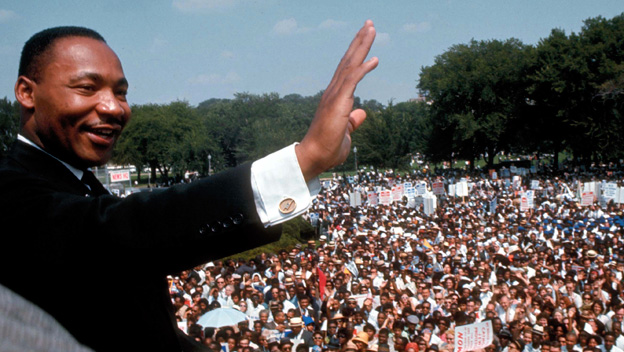
Martin Luther King's "I Have a Dream" Speech

On August 28th, 1963 Martin Luther King Jr. changed American history. His "I Have Dream Speech" which was given on that day is one of the most commonly known, recited, and referenced speeches even to this day.

King addresses the problems that America still had not fixed concerning black Americans. The problems that were supposed to be fixed after the Civil War were still clearly evident in the 1960s. The South was segregated and black Americans were not truly granted equality, even though an entire war was fought over the issue.

Martin Luther King states that after the Emancipation Proclamation was issued, black Americans thought they were finally being given an equal shot to become successful--but they were wrong. There was still injustice for years after the Proclamation. All men were supposed to receive "unalienable rights" under the Constitution but black men were still not being included.

King proclaims that he has a dream that some day whites and blacks will join forces and walk hand-in-hand towards equality. Some day society will see no difference between a black man and a white man--people are people, after all.


Saturday, January 9, 2016

LAD #24

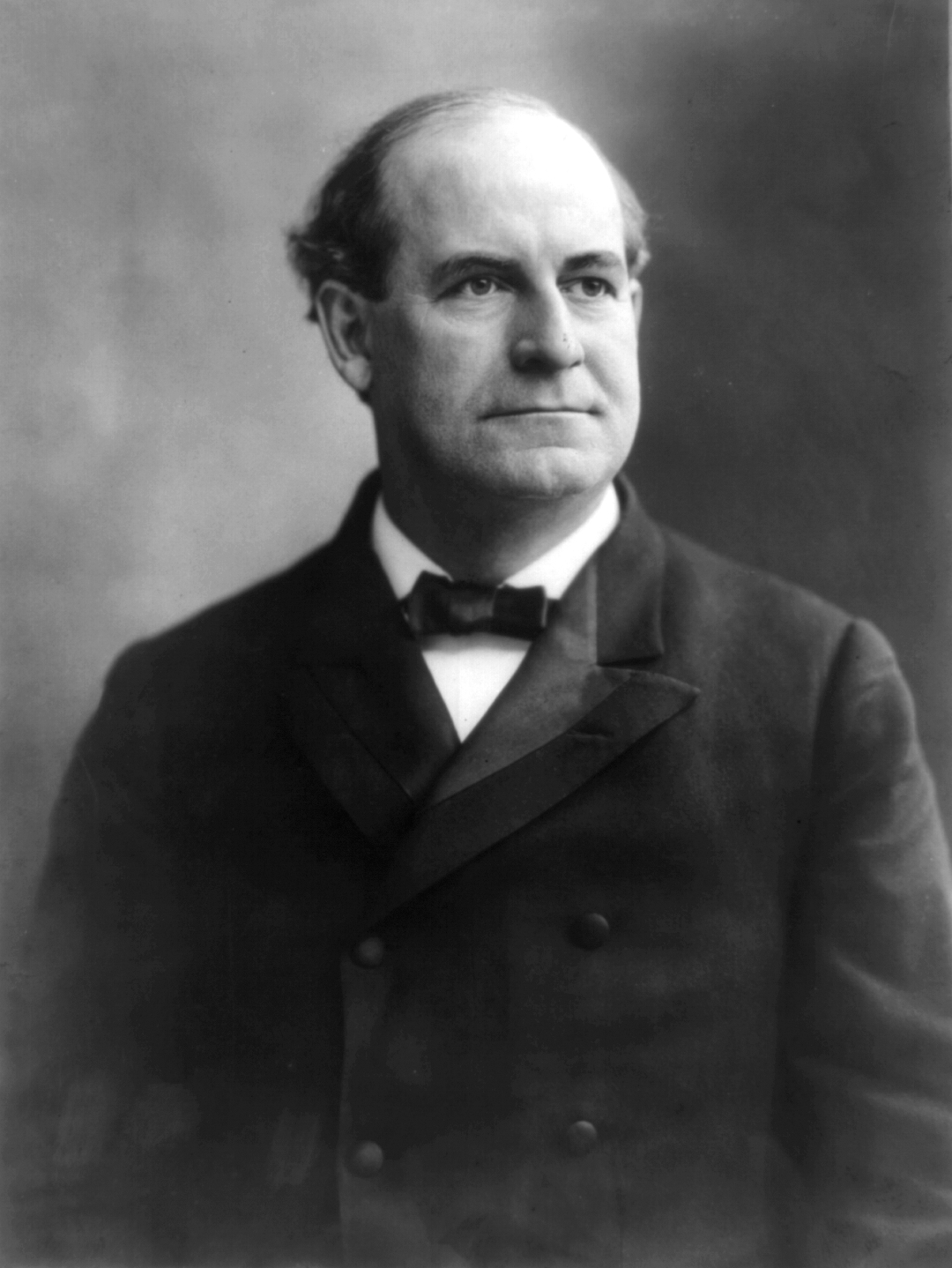
William Jennings Bryan's Cross of Gold Speech


LAD #23

The Populist Party Platform

The Populist Party emerged in response to the growth of Industrialization and the "concentrated capital" in banks and businesses in the United States. The party mostly consisted of farmers and it acted as a third party separate from the Democrats or Republicans.

Preamble: The Populist Party believed that "corruption dominates the ballot box" and that the businesses had too much control over government. The urban workers working for these powerful businesses were "denied the right to organize for self-protection" and the "imported pauperized labor was beating down their wages." Populists wanted the power to be put in the hands of the "plain people" to "end that oppression injustice."

Platform: The party believed that actions should be taken to improve the finance, transportation and land for the common people. Railroads and industries had too much power over the United States and "every dollar taken from industry without an equivalent is robbery."


Thursday, January 7, 2016

LAD #25

The Dawes Act of 1877

In 1877, Congress passed an act that allowed the president to inspect American Indian lands and divide it up to grant to certain individuals. The Indians that lived separately from the tribe would be allowed United States citizenship that was legalized through the government. This act was meant to have a "positive" impact on the Native Americans. Americans wanted to try to lift Native Americans out of poverty and tried to get them to assimilate into American white culture. This act also allowed the United States government the right to take Native American lands that they thought were "excess" and sell them for a profit. 

https://s-media-cache-ak0.pinimg.com/236x/b9/bb/34/b9bb34cab7022440b26ee3e925cb7433.jpg

LAD #22


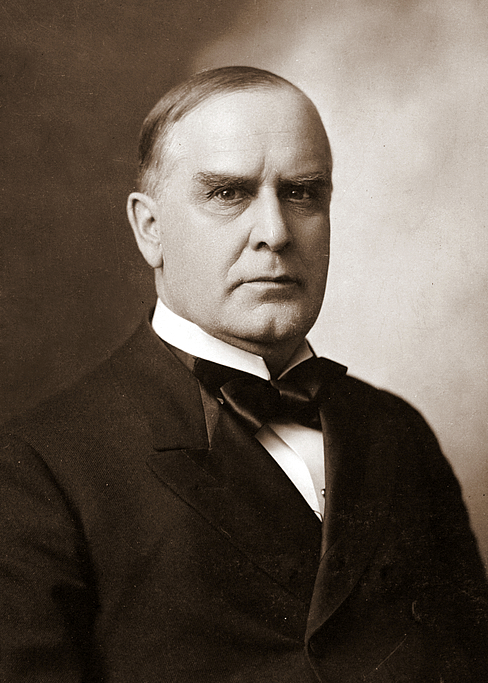
William McKinley's War Message

William McKinley, the 25th president of the United States, was reluctant to declare war against Spain, but eventually there was no other way to solve the conflict between the two powerful nations. He needed to declare war because the USA's "trade was suffering" and "capital invested by our citizens in Cuba has been largely lost." The United States had become a dominate power in the world and to maintain this reputation, war was waged with Spain. In the end, the United States government maintained some power and control over Cuban affairs and the USA annexed the formerly Spanish colonies of Puerto Rico, Philippines and Guam.